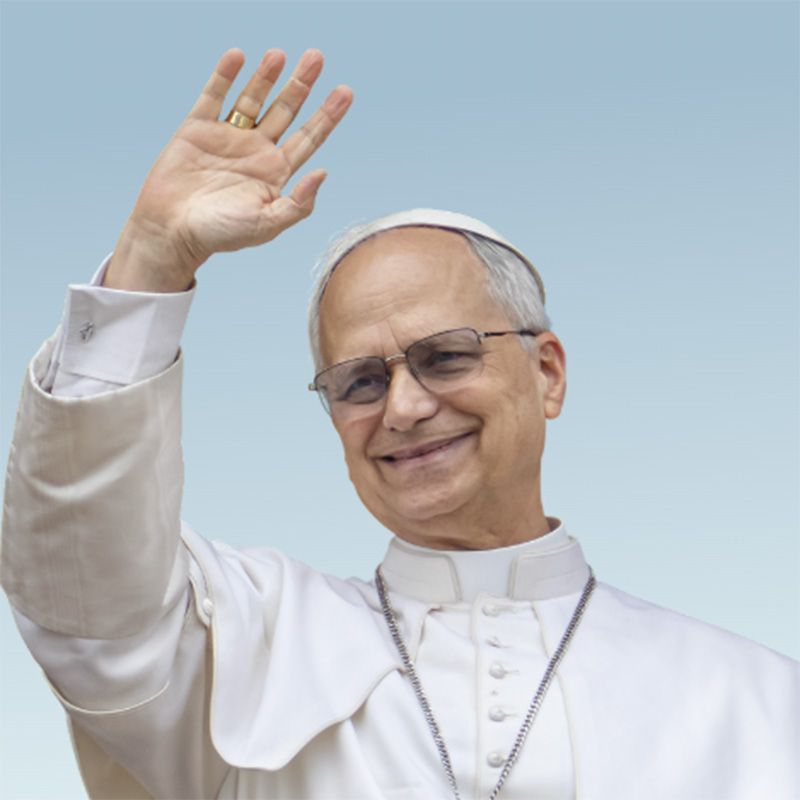
Pope St. Pius X
by
Rev. Marius McAuliffe, O.F.M.
| Posted by Richard Cure |
Dedicated to Giuseppe Sarto, the future Pope St. Pius X.
Who is Rev. Marius McAuliffe? While looking for a good book to read, my wife handed me a small 4×6 hardbound book, knowing I am a slow reader. It contained two groups of pictures that helped break up the reading. That was fine with me.
The question of who the writer was did not concern me until shortly after I started the book, when a brief comment indicated that something would be said about congregational singing. Pope St. Pius X is known for two main documents: his statement on singing and his condemnation of Modernism—both of which remain highly relevant to our times.
On page 106 the author gives an undocumented quote: “What a wonderful thing it would be, if the faithful could be taught to join in the singing of the whole Mass just as they do in the singing of the hymns at Benediction.” This was introduced in such a way that anyone familiar with Pius X’s "Motu Proprio" on choirs would assume the author was referring to that document. Having carefully read Pope Pius X’s "Motu Proprio", it was clear that the quote did not come from that document.
Pope St. Pius X’s "Motu Proprio" on choirs carefully specifies who should sing, who should not be allowed to sing, what they were to sing, and how they were to be trained. St. Pius X went into great detail about how a choir was to sing. A modernist might even claim that the pope’s document was written by a “control freak.”
If the same person were to write in support of congregational singing, he would at least have included some guidelines. The writer of the congregational-singing statement, by contrast, appears to have been an unconcerned, happy-go-lucky type, indifferent to the consequences. Such changes in tradition would inevitably lead to many further changes and raise serious questions about how the congregation would be guided or controlled. The two statements clearly did not come from the same person; two very different kinds of people would write them.
The "Motu Proprio" is an official Church document and stands with authority, while the congregational-singing statement seems to appear out of nowhere. Was the supposed statement made public before Pius X’s death? Did Pius X have any opportunity to correct the error?
On page 127 the author, Rev. Marius McAuliffe, O.F.M., quoted a passage that I recognized as purporting to be from Pope Pius X’s "Motu Proprio" on church music: “all the faithful and not merely the choir would join in singing the ordinary part of the Mass—the Kyrie, Gloria, Credo, Sanctus and Agnus Dei—in the same manner as they now sing the Tantum Ergo at Benediction of the Blessed Sacrament.” Something about it bothered me. When I went online and downloaded the authentic text of Tra le Sollecitudini (On Sacred Music) by St. Pius X, dated December 8, 1903, it became clear that the real document bears little resemblance to the version quoted above. Someone had made it look like a shortened version of the original while actually hijacking the document to promote congregational singing.
The one paragraph in the genuine "Motu Proprio" that comes closest to the quoted text is this: “Special efforts are to be made to restore the use of the Gregorian Chant by the people, so that the faithful may again take a more active part in the ecclesiastical offices, as was the case in ancient times.” The question then arises: what are the “ecclesiastical offices”? Are they the choirs? The real text does not support the idea of the faithful simply singing along in the manner suggested by the altered version.
Once the fabricated version is compared with the authentic "Motu Proprio", it is obvious that they were not written by the same person. St. Pius X never took shortcuts in his writing, just as he never took shortcuts in his thinking. He wrote carefully so that what he said would be clearly understood.
On page 136 the author devotes only three pages to the heresy of Modernism. He says nothing that would truly expose the modernists. Essentially he states only that Modernism is the “synthesis of all heresies.” While that is true, without further explanation it offers nothing practical that can be put to use.
The key to understanding the modernist lies in the modernist’s attitude. Modernists do not accept tradition as having any authority; they believe they are required to accept only whatever has been specifically condemned or explicitly stated by the Church.
In the time of Pius X the modernists held meetings promoting beliefs contrary to tradition, acting as though they had the right to establish a church within the Church. They enjoyed the support of certain bishops who permitted all sorts of modernist practices. Most bishops would not stand up against them, so Pope St. Pius X condemned Modernism in order to take a firm stand. Tradition stands for continuity and resists change, while modernists thrive on change. Change confuses the issues and opens the door to still more change.
Pope Pius X was canonized by Pope Pius XII in 1954, and the book under discussion was also published in 1954. It is a small hardbound volume filled with pictures—an attractive package designed to encourage people to buy this book rather than another. It confuses the nature of Modernism and attributes to the future St. Pius X words that would later align with statements issued by the so-called Sacred Congregation of Rites. It was this same Congregation that in 1958 issued “The Instruction,” which promoted congregational singing and the dialogue Mass. After exerting control over the medical advice given to Pius XII—producing, to say the least, a confused Pius XII—the Sacred Congregation of Rites published “The Instruction” without the pope’s permission, presenting it in the pope’s official publication as though it came from him.
Pius XII somehow recovered enough clarity to appoint a Relator to investigate what had taken place. About a month later, after Pius XII had died, the Relator published his “New Instruction.” It was written in such a way that a careless reader would be left confused. What it most clearly showed was what it did not say: it carefully avoided condemning anyone. The “New Instruction” demonstrated that Pius XII had neither approved nor published “The Instruction,” simply by not repeating what the Sacred Congregation had claimed. Without the pope’s authority, a document has no force. Therefore “The Instruction” was not a true Church document.
This book, Pope St. Pius X, helped set the stage for the later publication of “The Instruction.” The question remains: who was Rev. Marius McAuliffe, O.F.M., and what was his purpose?
Main Menu
- Home
Pray for the Pope A study of the papacy...Sedevacantism Most influential era...Thuc Lineage Information...Thuc Line A look at the Thuc Line...Schuckardt Mt. St. Michael's...
More Articles
-
“Active Participation” the Tool of the Modernist... -
So the Beat Goes On In years past we have been told that... -
Keeping the Faith in Stratton Personal history of traditionalism -
(Part 1) The Instruction The Instruction...September 1958 -
(Part 2) The New Instruction Participation in the Mass....October 1958 -
The Engine of Change Commentary on the Instructions -
Our Lady of Good Success Quito, Ecuador... -
Pope St. Pius X by Rev. Marius McAuliffe, O.F.M....
.jpg)
.jpg)
.jpg)
.jpg)
.jpg)
.jpg)